

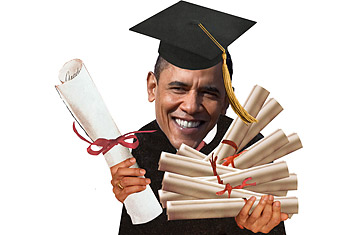
On March 15, President Obama unveiled his plan for reforming the nation's education system. The bulk of the plan, which looks to overhaul George W. Bush's frequently criticized No Child Left Behind law, advances the bold ideas with which this Administration has already become closely associated. The President wants to link billions of federal dollars to initiatives like ending the achievement gap between white and nonwhite students, evaluating teachers and awarding performance bonuses to principals and teachers who've earned them. On the basis of what we know has worked in New York City with our 1.1 million schoolkids, we'd give Obama's plan a solid B--a great start, but it could use a little improvement. Here's what we think works and what could be even stronger.
The President correctly refocuses the goal of our nation's public schools from simply giving students a high school diploma to making sure they are ready for college or a career. In other words, he wants to make sure a high school diploma means students actually have the skills they need to compete in an increasingly global workforce. Obama would define school success by how much improvement students make from grade to grade, no matter where they started, as opposed to the current system, in which schools are judged on students' absolute performance, not their progress. Obama's model is similar to the one we pioneered three years ago here in New York City, where we give schools an A-to-F grade based on how well they're helping their students acquire skills. The grades help focus schools on a clear set of expectations and are one way we hold them accountable. Principals and teachers in schools with high grades are eligible for performance bonuses. Schools with failing grades face leadership change or, in some cases, closure. The results are undeniable. New York State recently released graduation rates for the class of 2009, and they show a record number of city students receiving diplomas, including black and Hispanic students, who have historically been more likely to drop out. In the past four years, we've cut the dropout rate in half. The President calls for similar accountability measures in his plan, including performance pay and mandated school-improvement strategies. He's also in favor of requiring states to develop systems to evaluate teachers in part on the basis of student performance. This will go a long way toward improving teacher quality.
But the President must go even further. Our schools still offer teachers lifetime job protection, predominantly lockstep pay systems and seniority rules that reward longevity, not excellence. Our budget hole in New York is so big that we'll probably have to lay off teachers later this year. You know who will be the first to go? Thousands of energetic new teachers--simply because they were the last people hired. Sure, experience matters. But so do skill and energy. We must be able to make staffing decisions based on performance, not just time served. This President has shown an unprecedented willingness to challenge the powerful teachers' unions, but unless we finally eradicate these anachronistic employment rules, we'll continue to define reform as good intentions, extra dollars and insufficient results.