

(2 of 2)
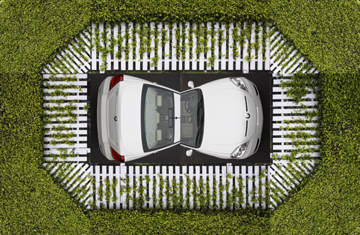
BYD is far from perfect — a concept car it revealed at the Paris auto show this year had its tires mounted backwards — but it received a boost last fall when American financial wizard Warren Buffett bought 10% of the company for $230 million, a stake that is now worth at least four times as much. "BYD is obviously way ahead of everyone," says Jack Perkowski, a Beijing-based businessman who has worked as an executive in the Chinese auto industry. "It has a core competency in the fundamental technology you need for electrics."
The same thinking lies behind Coda Automotive. The joint venture began after Lishen started producing electric batteries for Miles Electric Vehicles, a small-scale startup founded by former Ralph Lauren executive and philanthropist Miles Rubin. Coda Automotive, Rubin's next project, takes that relationship a step further. The Coda sedan (the body is made by another Chinese auto company, Hafei Motor) will run for about $45,000 when it goes on sale in California in 2010. Coda expects to sell about 2,700 cars in the first year, with an annual sales target of around 20,000. For Coda's Czinger, the China connection allows him to keep his costs low and, more importantly, to manufacture on demand, which cuts his risk considerably. There's no other way a startup could compete — even one that just pulled in $24 million in venture capital funding and gave former U.S. Treasury Secretary Hank Paulson an advisory seat on its board. "It allows us to manufacture flexibly without putting huge amounts of capital into metal-bashing facilities," says Czinger, who has years of experience working with Chinese companies. "It makes a big, big difference for our value chain."
Coda's future lies not just in the U.S. Lishen told TIME it is in discussions with 20 Chinese electrical-vehicle manufacturers to supply power systems for their cars. And while much of the attention is on how American, Japanese or European customers will respond to electrics, Chinese drivers could push the technology fastest. Auto markets are shrinking or stagnant in most countries, while the Chinese car market is still growing rapidly, even in the midst of a recession. And Chinese customers may prove more receptive to electric vehicles than their international counterparts. For an American driver who has owned a car for years and is accustomed to the power and range of a gasoline-powered engine, the first electric vehicles might feel like a letdown. Most Chinese drivers will be on their first cars, and won't have memories of Thunderbirds and Corvettes as they make their selection. An electric car, if priced well, might seem like a smart choice, especially as the cost of gas rises again. "The Chinese customer is just getting off a bike, so they're not worried about not being able to drive six hours without a recharge," says Philip Gott, a director for automotive consulting at research firm IHS Global Insight. "China has the chance to work out the kinks in its own backyard."
China's Great Advantage
There will be kinks. Chinese customers are likely to be just as sensitive to price as American ones, if not more so — and even China's low-cost manufacturers have yet to figure out how to make a reasonably-priced battery. Then there's the question of infrastructure. Few Chinese live in houses with easy access to plugs to power their cars, and there is little infrastructure ready for public charging. But none of that takes away China's late-starter advantage. Chinese companies don't have a hundred years of auto manufacturing to unlearn before they tackle electrics. Just as the country skipped ahead on mobile phones, it could do the same on electric cars. "Electrics could be a way for Chinese automakers to leapfrog the rest of the globe," says Perkowski.
If automakers in the U.S. and elsewhere aren't worried about losing the race for the next great technology to the Chinese, they should be. On Aug. 5, U.S. President Barack Obama announced a long-awaited $2.4 billion in government grants to support the manufacture of electric cars and batteries. "I don't want to just reduce our dependence on foreign oil and then end up dependent on foreign innovations," Obama told an audience in the economically depressed state of Indiana. "I want the cars of the future and the technologies that power them to be developed and deployed right here, in America." U.S. automakers will need to move fast — China is already pulling away.
With reporting by Austin Ramzy / Tianjin
The original version of this story has been amended. It now emphasizes that Lishen provides hardware manufacturing while Coda provides sales know-how and high-tech expertise. And also, Coda Automotive is based in Santa Monica, Calif., not Silicon Valley as stated.