

(3 of 3)
New Hope
Zinc could change that. Earlier this year, pilot zinc-treatment programs began in parts of Ethiopia and Tanzania, and several African governments are now looking at zinc programs. The treatment is already stirring interest among rich-country donors and drug companies: about 20 firms in countries from France to India have begun manufacturing zinc tablets during the past few years. "The private sector was never really interested in ORT," Fontaine says. "But zinc has totally taken off. It looks like real medicine and is not given out for free."
WHO officials such as Fontaine hope that zinc becomes so standard that it will be "like having Band-Aids at home." A second medical breakthrough should also help. At least one-third of all diarrhea deaths among young children are caused by the rotavirus, which infects the cells lining the small intestine and causes gastroenteritis. In June, the WHO approved the first rotavirus vaccine for global use. The vaccine, which in trials in Latin America, Europe and the U.S. cut rotavirus infections by 85%, could someday be part of routine vaccination programs for children, along with those for polio, measles and other diseases whose death rates have plummeted in recent years.
There are still hurdles. In Mali, where more than one in five children never see their fifth birthday, the government has finally added zinc to its annual list of 100 essential drugs, clearing the way for much wider distribution of the tablets. But only a few villages have received zinc tablets so far — and those have all come through the Save the Children U.S. program, whose funding expires next year, according to Tom McCormack, the organization's representative in Mali. Even though it has virtually no money to train health workers, Mali's government remains deeply reluctant to allow uneducated villagers like Moussa Traoré to distribute zinc. Frustrated, McCormack says some government officials don't trust villagers who have no formal health training. "There is a lot of ego involved," he says.
For their part, government officials say Mali's chronic shortage of skills severely hampers efforts to launch new programs. "Mali is vast and the level of knowledge is basic," says Adama Diawara, a ranking official at the Ministry of Health, adding that before approving zinc, "we needed evidence that it worked."
He doesn't have to go far to find that. In Morola, a village of some 500 people nestled among mango trees near the Guinea border, locals say that diarrhea deaths have fallen sharply since zinc tablets were distributed last year. When I visited in May, the village chief gathered five women together to talk about their lives. The group had lost seven children between them, four to diarrhea. Kinza Diallo, 29, says that when her 1-year-old daughter contracted diarrhea in 2004, she clutched her on the back of a motorbike for the hour's ride to the nearest hospital, where she was given "pills" and sent away. The girl died two days later. "Diarrhea has killed three of my children," she says. "I have been very unlucky." Now, she says, when one of her children gets sick she heads straight to the village pharmacy and buys a course of zinc tablets. Though several of the five womens' children have been sick in the past year, none has died.
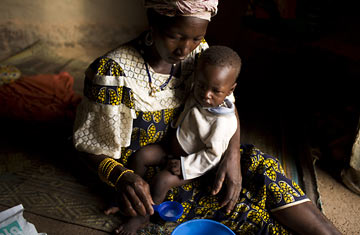
It's the same story in Sogola. Suleiman Djarra was, in fact, one of the village's last diarrhea victims. Aiseta Traoré watched in horror last February when another of her sons, Ablaye, developed similar symptoms to Suleiman. "I was terrified," she says. But once she started administering the tablets to her 2-year-old, he "came back to life," Traoré says. Some 3 million children have died of diarrhea since Suleiman. Now donors and governments have a chance to end this global tragedy and save millions. Let's hope they do.