

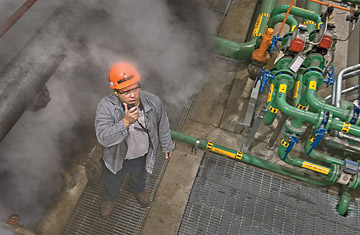
A worker at ATI, which specializes in making high-tech alloys.
(2 of 2)
And because the city's corps of middle managers was wiped out in previous downturns, companies are now looking for younger workers. Westinghouse hired 800 people last year, bringing its total new hires to 3,000 in the past three years. Most are engineers, half of them replacing engineers who first joined the company in nuclear energy's early boom years, in the '60s and '70s. The rest are enjoying nuclear's newfound popularity. The jobs range from about $55,000 for college grads to more than $100,000 for experienced engineers. Even tech workers with associate degrees can crack $80,000. That goes a long way in an area where a comfy three-bedroom house can be had for $150,000 or less.
Pittsburgh is certainly not going to escape a national recession. But it can provide lessons for how to survive it: invest in knowledge, compete globally, rewrite the old rules of business. A couple of its signature companies, such as Alcoa, have announced cutbacks as demand slows. "No area is totally immune, but it is going to be, if we are right, a bit more modest in Pittsburgh," says Stuart Hoffman, PNC's chief economist. From ground level, Bob Intrieri can see the same thing. A partner at Allegheny Steel Products, he sells industrial innards to the machine shops and factories in the region: forgings, hubs, steel bars, wire belts used in furnaces--the stuff the global economy runs on. "I call on power-generation shops, and those guys are busy as hell," he says.
Still, even machine shops in the Pittsburgh region had to face a new economic reality. Of course, you don't have to go far to see the face of America's current economic troubles: cross the state line into Ohio, which has a far greater exposure to the American auto industry, and the pain is palpable in industrial shops in Finley and Toledo. They don't have to be told that we're heading for a slowdown; they're already in one. But if Pittsburgh is any indication, there is virtue to going through hard times. The hard part is that it might take a decade to realize it.