

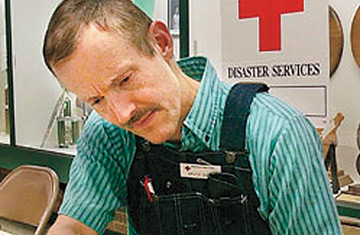
Bruce E. Ivins, a biodefense researcher, 2003.
(2 of 2)
Since Ivins' death, his attorney, Paul Kemp, has repeatedly said he was innocent. He says Ivins cooperated fully with the FBI during two dozen interviews and passed at least two lie-detector tests. Kemp claims the FBI harassed his client for months, driving him into a spiral of alcohol and depression. Certainly, Ivins' last months were tortured. He was twice hospitalized for depression, once after one of his counselors said he had threatened to kill his co-workers. By then law-enforcement officials had searched his home, his computers, his cars, his safe-deposit box, his office, his lab and all his emails. Agents had interviewed his children, showing his daughter pictures of the anthrax victims, according to Ivins' friends.
On July 6, three days before he allegedly threatened to murder his colleagues, he played the keyboard at Mass. "He looked bummed out," Byrne recalls, "but that was the norm for him these days." Byrne remembers Ivins doing one small thing that seemed out of character as he began to unplug his piano. "There was a folding table in his way. And he shoved that table about one foot away. It shocked me because he always does things right. That was the most violent act I ever saw him do."