

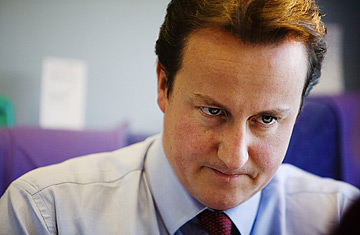
Conservative leader David Cameron on a visit to Scotland, January 18, 2007
(2 of 2)
The wellsprings of his political conviction are harder to trace. If a Kennedy inspires him, it's Bobby, the "wonderful orator," not his big brother. Unlike Blair and Brown, Cameron doesn't exude a strong affinity for the U.S. And in a departure from his predecessors, Cameron rarely invokes the name of the Tories' biggest icon: Margaret Thatcher. "To me, Mrs. Thatcher--it's all a long time in the past," says Cameron. "People are voting at the next election who were born after Mrs. Thatcher left office."
Many Tories of Cameron's generation believe that their party needs to reclaim the middle ground so brilliantly colonized by Blair and distance itself from the fiercely ideological course it charted during the Thatcher era. "We're seen as the nasty party," says Barker. To revamp that image, Cameron has engaged in conspicuously un-Tory-like behavior, traveling widely and posting a confessional blog at www.webcameron.org.uk He's promoting a doctrine he calls "modern, compassionate Conservatism," which is "about helping those people who can get left behind." In a nod to a nation where opposing global warming has become a semireligious duty, he claims to be more environmentally friendly than Labour. Cameron's slogan in local elections last May was "Vote blue, go green."
That sort of talk has worried some of the party faithful, but Cameron wants his big ideas to appeal across party lines. "You have to do what Bill Clinton did and build a big tent," says Dale, paying respect to a man whom an older generation of Conservatives dismissed as a pot-smoking, skirt-chasing lefty. But even Dale would like Cameron to signal to traditional Tories that "the old issues will be treated as seriously as the new ones." That might mean an overt reiteration of the Tories' traditional claim to be the party of low taxation. Or--always a favorite with the right wing--blaming the European Union for Britain's ills.
So far, though, Cameron has avoided making many explicit policy statements, relying instead on warm and fuzzy ideas like a belief in "social responsibility" that he says will empower business, individuals and local government. But in Britain's red-meat political and media landscape, warm and fuzzy is rarely enough. Popular attitudes to politicians are still set by the tabloids, which take no prisoners. And so far, the red tops aren't convinced. "I can't get to grips with Cameron, and I don't think the electorate can," says Trevor Kavanagh, the longtime political voice of the Sun. Here's a warning for the conservative comer: if the Sun thinks you're not substantial enough, that's a weight problem to worry about.
To read the full interview with Cameron, go to time.com/cameron